

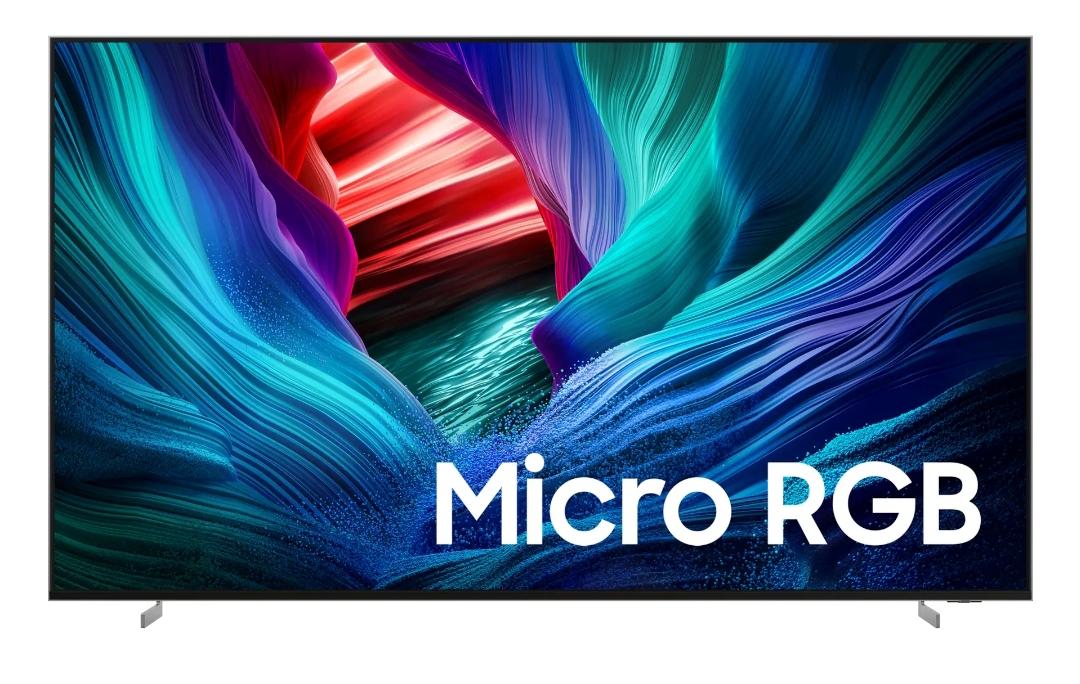
Samsung recently unveiled the Micro RGB technology and it is a new micro-scale RGB backlighting panel for screens. It was first unveiled in a 115-inch screen and will definitely be used for larger screens and TVs, however, the Samsung micro-RGB panel may have many more promising implementations that would inevitably lead to better visuals across quite a number of devices.
Samsung’s Micro RGB panels work just like OLEDs, but on screens that are 100 inches and above, and likely, Micro-RGB RGB may trickle into everyday devices within our homes. So many things go into how the panels work and will be discussed further in the article.
Samsung Micro-RGB Technology: Definition

Image credit: Samsung Showroom
Given the increased interest in this Micro-RGB technology, there is a need to understand exactly what it is and how it works.
To simply explain it, Micro-RGB technology is a form of display technology by Samsung, that works by using tiny RGB LEDs meshed on a panel to create very clear and very crisp visual feedback.
Each RGB LEDs run as small as a tiny speck of dust and can provide more individualized control over the visual product.
The Micro RGB technology holds promise for its potential to optimize colour accuracy and user experience for Samsung devices as a whole.
Micro RGB panels are a bit different from that of the regular/conventional OLED and LCD Screen as it offers finer controls over colour, brightness and other visual functions.
While the latter relies heavily on bigger pixel structures, the former is just a mesh of many tiny LEDs which can also lead to a reduction in light bleed, better and sharper contrasts and much deeper blacks.
Also, the RGB LEDs are colored red, green and blue instead of just being a white light that passes through filters, as seen in OLED and LCD, thus making the display more accurate and less washed out.
The Samsung Micro-RGB technology has quite a number of advantages that make it better than those conventional display technologies, especially in terms of brightness, colour production and energy saving qualities.
How Are Samsung Micro-RGB Panels Built?
Many steps go into the building of these micro-RGB panels and the structure is the most important factor.
The Micro RGB system uses a very dense layer of quite tiny (less than 100µm) of red, green and blue LEDs as a backlight. This allows Samsung devices (mostly the TVs for now) fine-tune light output with far more precision than current Mini-LED set-ups. It promises to deliver richer colours, punchier highlights, and contrast.
Now, this mesh of micro-LEDs and RGB subpixels is built on Samsung’s proprietary Micro RGB Technology, which arranges the individually controlled LEDs in an ultra-fine pattern behind the panel. Unlike conventional backlighting, the architecture enables precision control over each red, green and blue RGB LED.

Image credit: Image Mattix
Manufacturing process and precision engineering
Samsung’s Micro RGB TV uses a different approach. While the name suggests it could be related to Micro LED, it actually combines miniaturized RGB LEDs with advanced control . This setup improves picture quality, but it does not achieve the same pixel-level independence
Advantages of Micro-RGB Panels in thickness, flexibility, and durability
The Micro-RGB panel is flexible and not so thick, however the thickness varies for whichever product it is used in. On the other side, it is super durable and energy-saving as it requires less energy for display, consequently reducing burn-in that can affect the lifespan of these panels.
What Are the Advantages of Micro-RGB Panels?
Micro-RGB Panels offer many advantages including, higher brightness and contrast, better color accuracy and wider color gamut, and finally, better energy efficiency when compared to conventional displays.
- Colour: With the Micro RGB panels, viewers can expect remarkable color accuracy and this is because displayed content captures a vast spectrum of colors.
- Brightness: The Micro RGB panels deliver superior brightness and contrast since each pixel has independent operations.
- Energy efficiency: the Micro-RGB panels consume way less power even when at higher brightness levels.
What Are the Applications of Samsung Micro-RGB Panels?
The layered structure of the Micro-RGB panels helps devices to achieve high pixel densities and remarkable image clarity, thus, can have various applications. Some of these applications can be in the following:
- Smartphones and foldable devices
The ability to turn off individual pixels completely leads to low power consumption and can be super useful to portable devices like smartphones and foldable devices.
- AR/VR and wearable technology
The increased display control and nearly 180-degree wide viewing angles that maintain consistent color and contrast even from extreme positions are widely helpful for AR/VR technology as they could create a more immersive experience.
- Potential use in monitors and TVs
While already in use for the Samsung micro RGB TV (<100 inches), there is great potential for use in other kinds of monitors used in professional settings like medical devices, where colour differences can greatly influence diagnoses.
How Do Samsung Micro-RGB Panels Compare with Other Display Technologies?

Image credit: Samsung Gulf
Micro-RGB vs AMOLED
Micro-RGB, typically offers higher peak brightness (2000 nits < 1000-1500 nits), longer lifespan ( over 100k hours < 50k hours in sustained use), and less energy waste when compared to AMOLED. However, Micro-RGB is currently more expensive but better overall quality, than AMOLED.
Micro-RGB vs Mini-LED
While each panel is designed to avoid the typical use of a color filter system, Micro-RGB still actively produces purer colors that are more accurate and also vibrant. Mini-LED panels tend to be more focused on having brightness locally controlled, which is also known as local dimming which helps in highlighting contrast.
Currently, production rates of conventional panels are higher than Micro-RGB. However, when they are higher, they could serve as the best option for most devices as, the benefits greatly outrank those of the conventional panels.
FAQs
What is Samsung Micro-RGB?
The best way to describe this Micro RGB technology, spear-headed by Samsung, is as a display technology that makes use of a multitude of tiny-scale RGB LED backlighting in the panel to create clear and crisp visuals.
What is the Samsung sRGB mode?
Samsung sRGB mode is a color standard that ensures consistent and accurate color reproduction on electronic devices. When enabled, it limits the color gamut to match the sRGB standard, resulting in more realistic and true-to-life colors on your device's display.
When are the Samsung Micro LED TVs going to be available?
The Samsung Micro LED TVs could most likely be available in 2026, but it is not yet confirmed.
Which of the Samsung Galaxy Phones has a micro SD card slot?
These phones are the Galaxy: S7/S7 Edge, S8/S8+, S9/S9+, S10/S10+, S20/S20+/S20 Ultra, Note 8, Note 9 (512GB), and Fold (512GB).
Does Samsung make RAM and is it good?
Samsung does make RAM, and it's just as good as any other brand with similar specification.
How often do new Samsung phone releases happen and how frequent do they get new update software?
Most of the time, within the past few years, new Samsung phones are usually released annually (every year) and then the update software, depending on the phone series, are released every month, every three months, or twice in the year.
Conclusion
Samsung’s Micro-RGB Panel is really innovative and will definitely make a distinct mark in colour accuracy in devices going forward. The better color, quality, and energy efficiency, promises to be a huge step for Samsung and display technology as a whole.
Share:
Can You Reduce Blue Light Without Sacrificing Color Quality?
Galaxy Z Tri-Fold: Recent Updates About Samsung’s Foldable New Phone