

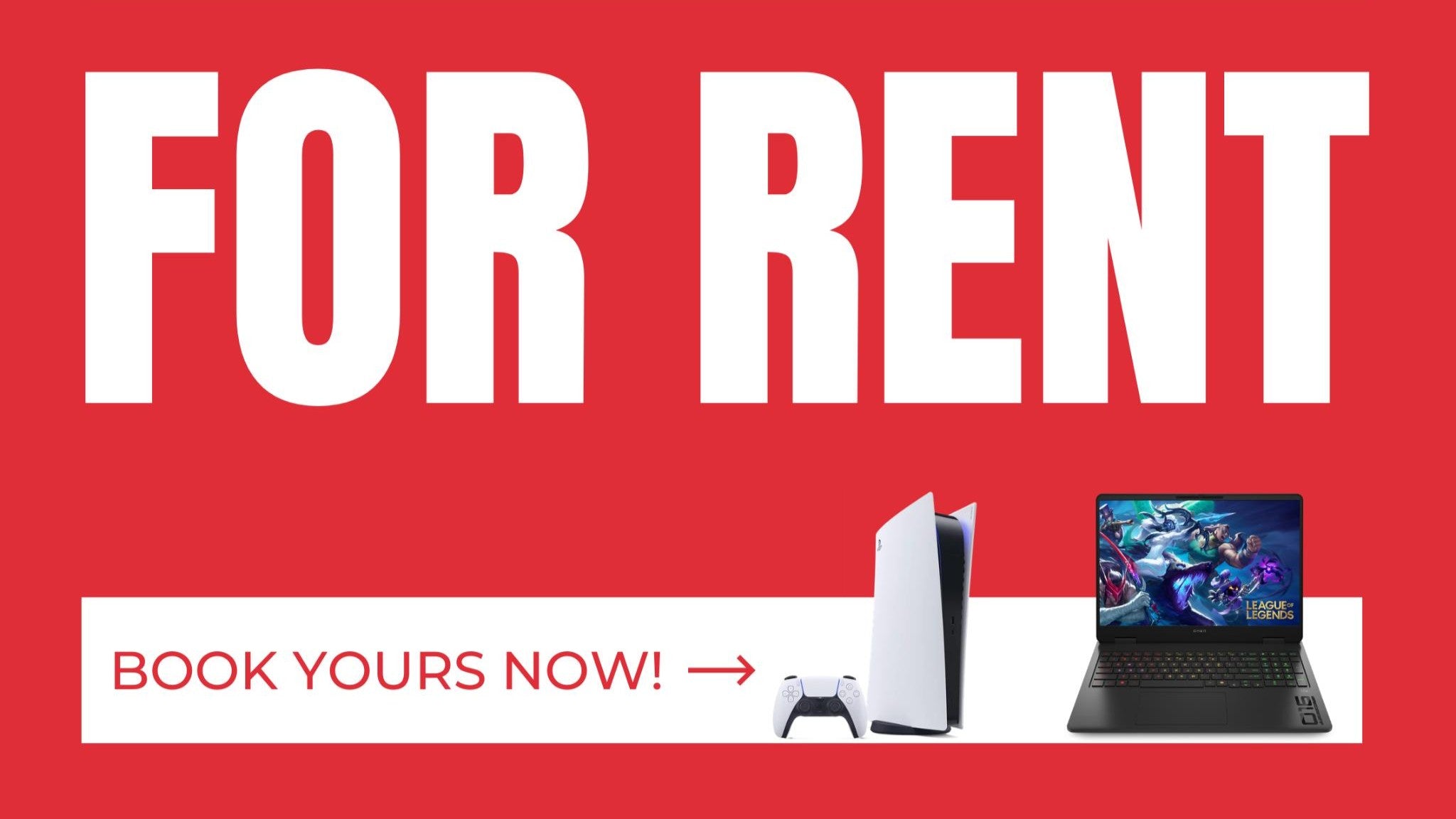
Gamers have started noticing a worrying trend lately. Gaming PCs and consoles are slowly becoming a “rented” commodity. What’s fueling this shift seems to be the current mess in the hardware market, but it’s worrying all the same. But is this truly the future of gaming as we know it? Will we never own consoles or gaming PCs again?
Today, we’re taking a speculative look, grounded in reality, to figure out if that’s truly what the future holds for us gamers. We’ll take a deep dive into the current phenomena plaguing our very existence as gamers, its impacts, and figure out whether this is something we should actually be worried about.
The Problem – The Seemingly Never-Ending RAM/GPU Shortage
Arguably, the ‘biggest’ contributor to the seemingly increasing phenomenon is the ongoing memory & GPU shortages we’re currently facing. With ever increasing demand for high-performance chips and GPUs driven by AI, gamers are getting the short end of the stick.
We’ve seen, even in the short term, massive spikes in prices for RAM and GPUs, making it nigh impossible to upgrade a PC with semi-decent specs. And it’s not just internal components either. Add in a proper gaming monitor, and a full setup upgrade is pricier than ever.
This has also resulted in delays and pricing uncertainty for new hardware launches, like the Steam Machine.
One of the First Victims – Valve

According to Valve’s update post on February 5th, while the newly announced hardware isn’t “delayed”, there is still uncertainty on a concrete release date and pricing. They mention this is in part due to “memory and storage shortages”, which have ramped up since the initial reveal.
“The limited availability and growing prices of these critical components mean we must revisit our exact shipping schedule and pricing (especially around Steam Machine and Steam Frame),” the post mentioned.
Adding to that, we’ve also seen news that the Steam Deck has all but disappeared in select regions, including the U.S. and Europe, since stock is quickly running out, and there doesn’t seem to be a replenishment coming anytime soon.
This is also, supposedly, a result of the memory shortage currently plaguing the market.
The problem is that even when companies, like Valve, that champion ownership, are constrained by the reality of supply shortages, we’re sailing into uncharted territory where there’s a new need for alternative ways for consumers to get a product.
And for now, it’s looking like that alternative way will be rentals and subscriptions.
All this considered, we’re seeing real-world implications to the ongoing RAM/GPU debacle, and it seems to be reaching further than we thought. Valve was just one of the victims so far; the next could be us consumers.
A Vote of No-Confidence
While we typically wouldn’t take to heart the words of a billionaire, especially in the gaming space, there is a concerning bit of evidence that suggests the industry is heading towards a place where gamers no longer own the hardware they game on.
This comes from none other than Amazon’s Jeff Bezos, who said in a panel interview last year that “Everybody has their own data center, and that's not going to last. It makes no sense. You're going to buy the compute off the grid. That's AWS.” he said in relation to his current efforts with Amazon, working “95%” in AI.
The Interview: From Amazon to Space — Jeff Bezos Talks Innovation, Progress and What’s Next
What he’s alluding to here is the fact that we, as consumers, will eventually reach a time where we no longer have our own, standalone rigs running our games (or computing power). Rather, we’ll essentially just lease it off a grid, like through AWS.
Right now, this just seems like the inner thoughts of a man’s ideal world (where he’ll profit off most), but it’s hard to argue that fact. We’ve already seen the rise of cloud gaming services in the past few years, so it’s not “impossible” to imagine.
While this doesn’t speak clearly to gamers no longer “owning” their hardware, it does seem like one of the world’s most successful tech-preneurs is predicting a future where we’re in a perpetual loop of leasing, renting, and no longer owning our computing power.
Whether these two factors are the only contribution to the worrying trend remains to be seen, but what we do know is that “rented” gaming hardware is already a dystopian reality.
How Gaming Brands Are Responding
So far, we’ve seen two gaming behemoths make their claim in the “rental” gaming hardware business. While it isn’t as mainstream as just owning a rig or using a cloud gaming service, this does serve as evidence that the idea isn’t off the table.
HP Omen’s Rental Gaming PC Program

The first example we saw of the gaming hardware rental phenomenon was from HP’s gaming PC brand, Omen.
The way it works is you choose one of (currently) 4 of their Omen gaming laptops, ranging from price and specs, starting from $49.99/month for the Victus 15” with an AMD Ryzen 7 processor and NVIDIA RTX 4050 GPU, to a $129.99/month Omen Max 16” sporting the Intel Core Ultra 9 processor and NVIDIA RTX 5080 GPU.
For context, let’s take the exact same specs for the Omen Max 16” and what it costs to buy it outright. Based on HP Omen’s sales page, this would cost $3,399 (excluding timed discounts) to customize and purchase the same machine.

If we do some quick math, $129/month for a year (excluding tax/extra charges), means you’d have paid $1548. Nearly half of what it would’ve cost if you just bought the laptop instead of renting it.
Now that might sound like a good deal, but the payments never actually lead to ownership.
Even more so, when you consider whether you have a credit card or use a BNPL (Buy now, pay later) scheme, you’d still probably pay less, and actually own the laptop down the line.
We’re sure the Omen Max can dish out some impressive performance with jaw-dropping visuals (for a gaming laptop), but for something so pricey, it’s still a gaming laptop that wouldn’t compare to a proper PC desktop rig paired with a 27-inch gaming monitor for a more immersive setup.
PS5’s for Rent in the U.K.

Another prime example of the new field of rental gaming hardware is none other than PlayStation itself. In the UK, Sony has partnered with Raylo to make their armada of PS5 hardware available for rent, with plans ranging from 12, 24, and 36 months.
There are a few bundles you can choose from, ranging from the standard PS5 to the Digital PS5 and the PS5 Pro, with 825GB, 1TB, or 2TB variants, and one or two controllers included.
You can also rent PlayStation Portal, DualSense Edge controller, and PSVR2 headsets.

For the PS5s, the most basic plan you can get is the Digital Edition PS5 with 825GB and 1 DualSense controller, for £9.95/month for the 36-month rental plan. Purchasing the console outright would set ya back a cool £429.99, but with the plan, you’d pay £358.20 for the lease term.
To be fair, PlayStation’s rental scheme is a bit more understandable considering the price point. Plus, even by the end of your lease, you probably won’t have to upgrade anytime soon to a ‘newer’, more powerful console, since the PS6 is still a ways off.
But still, while breaking up the cost over 12, 24, or 36 months does feel cheaper, at the end of the day, you won’t own the console.
Who Might Be Able to Take Advantage of Rental Subscriptions – But Why It’s Still a Bad Idea

While the phenomenon is worrying, there are still people who may be able to take advantage of gaming hardware rental schemes. For example, gamers who don’t have the money for a new gaming PC or console outright.
This could be an affordable way to try high-end hardware without committing thousands upfront. Especially for players who want smoother performance on a 120Hz gaming monitor but can’t justify upgrading their entire rig all at once.
It provides another layer of flexibility so that you’re not locked into purchasing gaming hardware, only to realize you don’t like it or use it as much as you thought you would.
Plus, this also opens up an avenue for gamers who need the most powerful specs, without breaking the bank. Some players even opt for portable setups with something like an 18.5-inch 120Hz gaming monitor to stretch their hardware further without committing to a full desktop overhaul.
As an example, one of the advantages we noticed is that with HP Omen’s gaming laptop rental, you have the choice to upgrade your laptop yearly.
So once the latest version comes out, you can simply upgrade to a new system with refreshed specs. Whether this will cost you more is another thing entirely, but there is the option to do so, which makes the idea that much more appealing.
Why It’s Still a Bad Idea
At the end of the day, we think these kinds of practices are just a bit too predatory for our liking. It largely appeals to gamers who can’t justify the upfront cost of buying new hardware outright.
This way, they lock players into their ecosystem to keep them paying monthly in hopes that they come to the realization that they don’t want to part with their hardware once the lease is up.
For example, HP Omen’s rental gaming laptops have a 30-day free trial for you to try them out and see if you like them.
However, if you go past the 30 days and decide you don’t want to keep paying for the plan anymore, you’ll need to pay a hefty cancellation fee.

When you take that into consideration, you may just end up paying more than the hardware is worth if you choose to cancel the subscription.
All of these schemes popping up clearly normalize the fact that you don’t own what you buy.
We’ve seen this already in the gaming sphere, where digital storefronts just remove games you’ve purchased, or get outdated (RIP my Nintendo 3DS collection), so you can’t even buy or sometimes play the games you’ve already bought.
While the idea does have some merit, as a whole, we think the idea that you won’t own what you pay for is a bit too daunting a reality to justify the advantages.
Our Final Thoughts
The real danger isn’t that you might rent your next gaming PC or console. It’s that one day, you might not even be given the option to buy it outright.
Hardware shortages, AI-driven compute demand, and corporate subscription models are quietly reshaping how we access technology. Rental programs may feel harmless today, even convenient, but they lay the groundwork for a future where ownership becomes optional, then rare.
Gaming has already moved from physical discs to digital licenses. From one-time purchases to battle passes. From boxed expansions to live-service models. Renting the hardware itself may simply be the next step in that evolution.
The worrying trend isn’t just about consoles or gaming PCs. It’s about control. And once ownership slips away, it’s a lot harder to get it back.
For now, gamers still have a choice. The real question is whether we’ll keep it.
If you want to buy other portable monitors, you can visit the UPERFECT website.
Share:
Will There Be a New Xbox Console? All The Details We Know (2026)
Nintendo Switch vs Switch 2: Should You Upgrade in 2026?